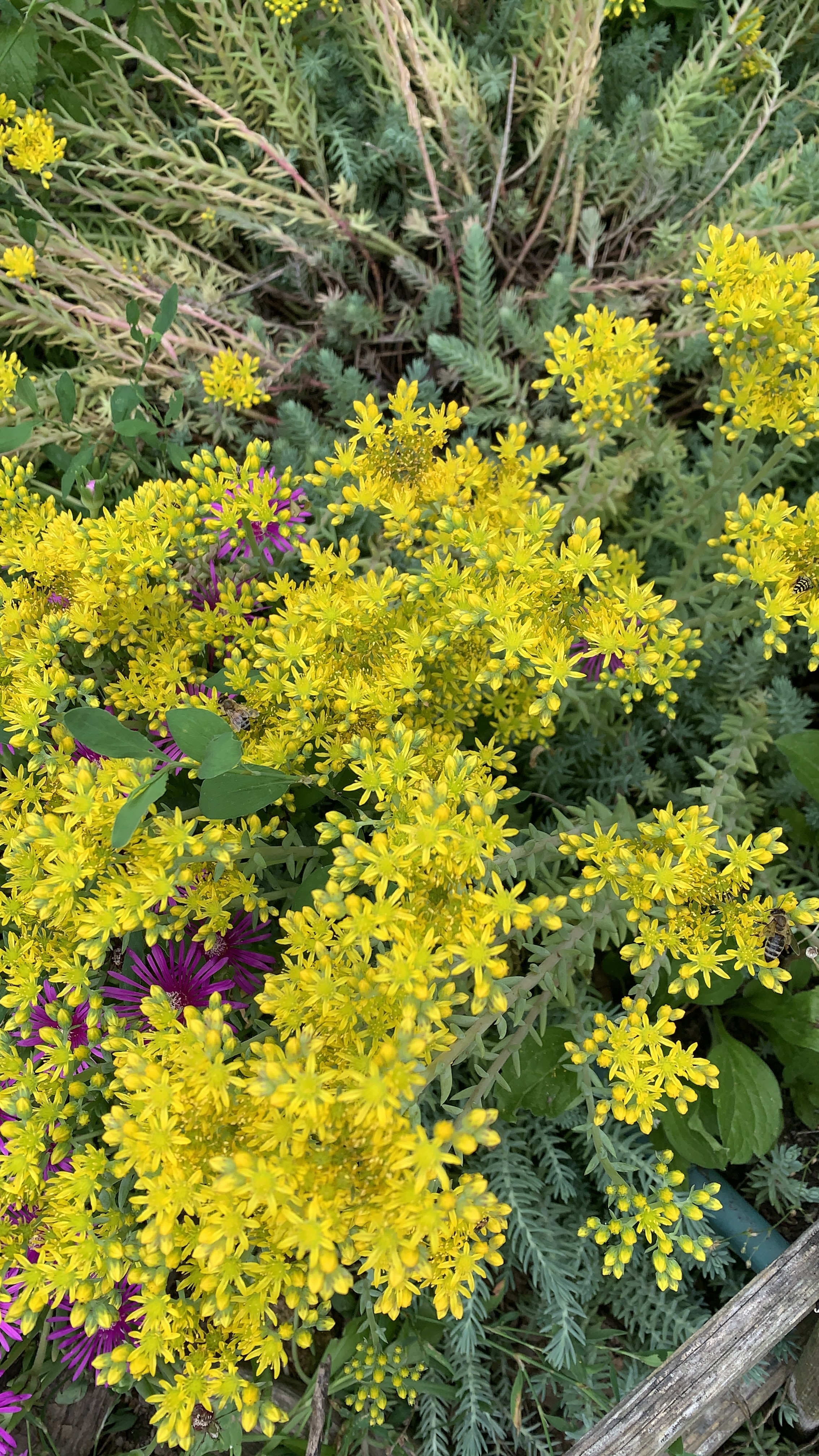
Sedum montanum is a species of flowering plant in the family Crassulaceae, native to central and southern Europe. Growing to 20 cm (8 in) tall by 30 cm (12 in) wide, it is a dense, mound-forming perennial with small, fleshy, dark green leaves, and clusters of yellow star-shaped flowers in summer. It is suitable for growing in rock gardens, as an edging plant, or in containers. It prefers full sun and well-drained soil. The Latin specific epithet montanum refers to mountains or hills.
Growing Details
Sow Sedum seeds in late winter. Just barely cover the tiny seeds. The best way to start Sedum seeds is to use a well-draining seed starting mix and a seed flat or plug tray. Use a spray bottle to lightly mist the soil, keeping it moist but not wet. Place the seed tray in a warm location out of direct sunlight. The ideal temperature for Sedum seed germination is around 70 degrees Fahrenheit. Keep the soil moist, but not wet, until Sedum seeds germinate. Transplant Sedum seedlings outdoors after all danger of frost has passed and they have several sets of true leaves. Select a planting site in full sun with lean, sandy, well-draining soil. Space Sedum plants 18 to 24 inches apart.
Edible Parts
Tags
Attracts Wildlife Bee Friendly Easy Propagating
Range (Based on GBIF Data)
The map shows known occurrence points of <strong>Sedum montanum</strong> recorded in scientific biodiversity databases.
Source: <a href="https://www.gbif.org" target="_blank">GBIF.org</a> — Global Biodiversity Information Facility
Location & Timing
native geo location:
applicable geo region:
language used:
Flowering:
beginning
of Jun for 60 days
Harvest:
beginning
of July for 30 days
Seed Start:
beginning
of March
Indoor Start:
Transplant:
Uses & Benefits
Edible Rating:
(1/5)
edible uses: The leaves and stems can be eaten raw or cooked. A somewhat astringent taste, they make a good addition to salads or can be used as a pot-herb. The plant can also be used as a famine food, it can be dried and ground into a powder then used to make a porridge.
Medicinal Rating:
(0/5)
medicinal uses:
health concerns: None known
other uses:
Scientific Literature
Loading scientific articles about <strong>Sedum montanum</strong>...
Botanical data
specie: Sedum montanum
common names:
family: Crassulaceae
sub family: Sedoideae
tribe: Sedeae
sub tribe: Sedinae
genus: Sedum
Growing Conditions
area needed: 10.0 m
spacing: 10.0 m
grow time (non perennials): None days
growing difficulty:
Deciduous / Evergreen: Deciduous
Seed Temp (Opt/Min/Max): 20°C / -20°C / 30°C
Plant Temp (Opt/Min/Max): 20°C / -20°C / 30°C
water demands: Medium
humidity:
light demands: Medium
root type: Shallow
frost tender:
hardness:█████▁▁▁▁▁(5/10)
first harvest: 2 years
life span: None years
succession:
growth rate:
max height: None m
max width: None m
soil preference:
pH preference:
flower type:
growth details: Sow Sedum seeds in late winter. Just barely cover the tiny seeds. The best way to start Sedum seeds is to use a well-draining seed starting mix and a seed flat or plug tray. Use a spray bottle to lightly mist the soil, keeping it moist but not wet. Place the seed tray in a warm location out of direct sunlight. The ideal temperature for Sedum seed germination is around 70 degrees Fahrenheit. Keep the soil moist, but not wet, until Sedum seeds germinate. Transplant Sedum seedlings outdoors after all danger of frost has passed and they have several sets of true leaves. Select a planting site in full sun with lean, sandy, well-draining soil. Space Sedum plants 18 to 24 inches apart.
Potential Disturbances: Sedum montanum faces pressures from aphids, caterpillars, slugs, and snails, which can affect its growth and vitality.
Growth Timeline
Recipes Using This Plant
Animals Interacting With This Plant
Permanent Link
Scan this QR code for a permanent link to this plant:

Loading comments...