Description
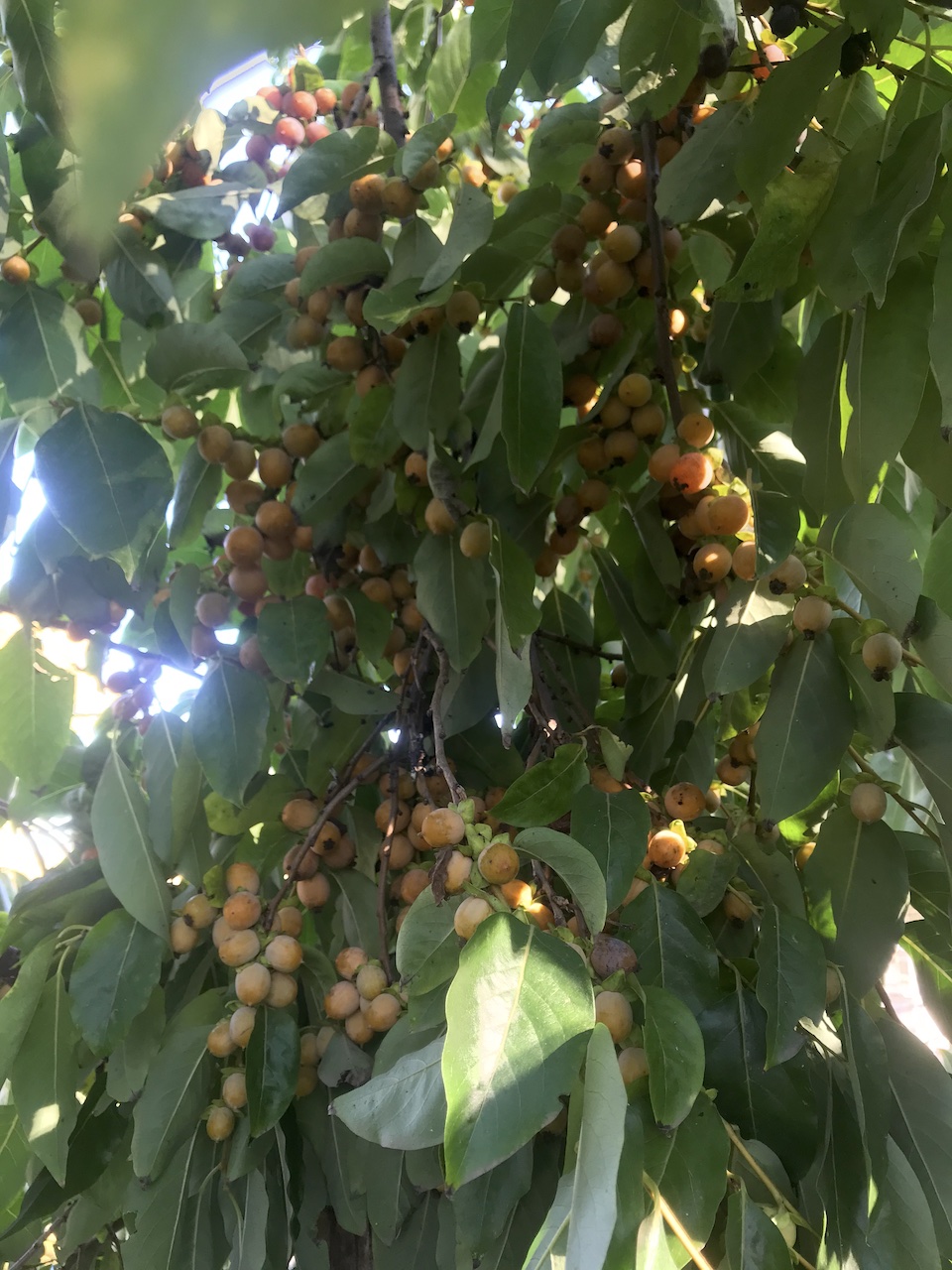
The American Persimmon is a large deciduous tree reaching a height of around 20m and a trunk diameter of 1m. It typically occurs in woodlands, along streambanks and in ravines. It prefers moist, deep, rich soils, but is also tolerant of compacted, clay soils. It is generally dioecious (separate male and female trees), but sometimes monoecious (both sexes on the same tree) with both sexes on the same tree.
Range (Based on GBIF Data)
The map shows known occurrence points of <strong>Diospyros virginiana</strong> recorded in scientific biodiversity databases.
Source: <a href="https://www.gbif.org" target="_blank">GBIF.org</a> — Global Biodiversity Information Facility
Location & Timing
native geo location: Eastern USA
applicable geo region: North America
language used: english
Flowering:
beginning
of Jun for 45 days
Harvest:
middle
of October for 30 days
Seed Start:
beginning
of November
Indoor Start:
Transplant:
Uses & Benefits
Edible Rating:
(5/5)
edible uses: The fruit is very astringent and unpalatable when raw, but it becomes sweet and delicious when it is ripe. It can be eaten fresh or made into pies, puddings, jams, jellies, and wine. The dried fruits can be used in cookies, cakes, and breads. The bark and leaves can be used to make a yellow or brown dye. The wood is hard, heavy, close-grained, and takes a good polish. It is used for furniture, flooring, veneer, tool handles, and turned objects.
Medicinal Rating:
(2/5)
medicinal uses: A decoction of the bark has been used as a wash for itchy skin and poison ivy. A poultice of the chewed bark has been applied to sores, swellings, and bruises. The fruit has been used as a laxative and as a treatment for dysentery, diarrhea, and colic. The astringent fruit has also been chewed to relieve toothache pain. A tea made from the leaves has been used to treat colds, bronchitis, and diarrhea. The root bark has been used to treat malaria.
health concerns: None
other uses: The wood is hard, heavy, close-grained, and takes a good polish. It is used for furniture, flooring, veneer, tool handles, and turned objects.

Loading comments...