Description
Garlic (Allium sativum) is a potent and ancient culinary ingredient, revered not only for its distinctive flavor but also for its extensive history of medicinal use. A member of the Allium family, which also includes onions, leeks, and chives, garlic has been cultivated for thousands of years and features prominently in various culinary traditions around the world. It is valued for its ability to enhance the taste of food, offering a range from subtly sweet to intensely pungent flavors depending on how it's prepared. Garlic's unique taste and aroma are due to its sulfur-containing compounds, which are also responsible for its health benefits. Beyond its culinary uses, garlic has been utilized in many cultures for its purported therapeutic properties, including boosting the immune system, reducing blood pressure, and fighting heart disease, among others.
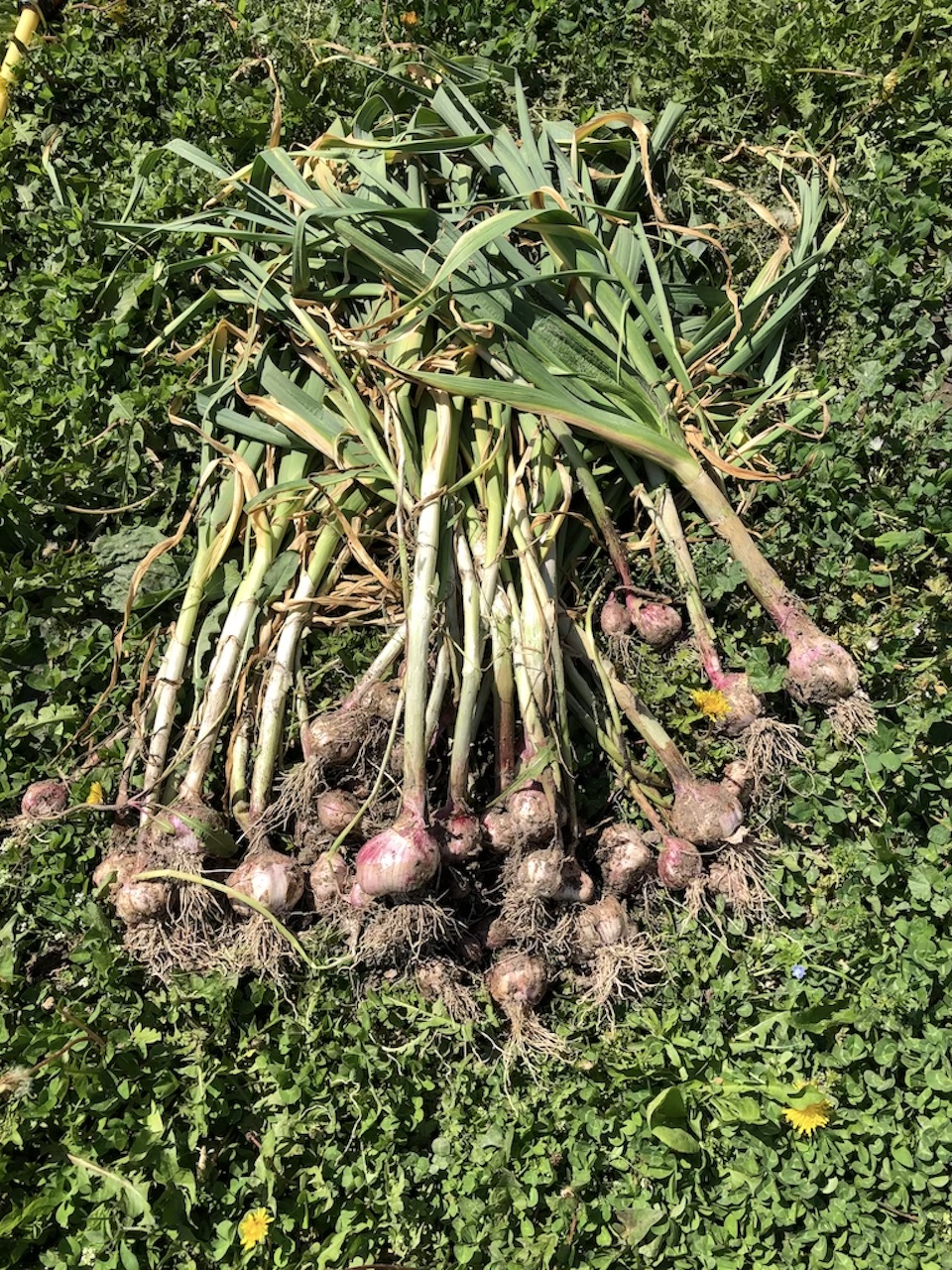
The cultivation of garlic requires patience, as it is typically planted in the fall and harvested in the late spring or early summer, depending on the climate. Garlic prefers well-drained soil, full sun, and cool to moderate temperatures for optimal growth. It is relatively easy to grow and can be cultivated in garden beds or containers, making it accessible to a wide range of gardeners. Each clove planted in the fall will develop into a full bulb by the harvest season, ready to be used fresh from the garden or stored for later use. The practice of growing garlic is as rewarding as it is ancient, providing gardeners not only with a versatile kitchen staple but also a connection to a long tradition of agricultural and culinary heritage.
Uses & Benefits
Edible Rating:
(5/5)
edible uses: Garlic is widely used around the world for its pungent flavor as a seasoning or condiment. The cloves are used for consumption (raw or cooked) or for medicinal purposes. Garlic powder, an important ingredient of many dishes, has a different taste from fresh garlic. The green shoots (called garlic sprouts) and immature garlic cloves are also used.
In many cuisines, garlic is crushed and used as an ingredient in various pastes, sauces, soups and other foods. These dishes are often strongly flavored with garlic, and may be unpleasant to eat for people who are not accustomed to this taste. In Korean cuisine, garlic is usually fermented in soybean paste to make doenjang.
In Chinese cuisine, garlic is used in stir fries, not just for the flavor, but the fragrance it releases when cooked. Garlic is also used in Chinese medicine as a warming herb.
Medicinal Rating:
(5/5)
medicinal uses: Garlic has been used medicinally, in one form or another, for more than 3,000 years. It was used in ancient Egypt not only as a medicine, but for mummification and as a insecticide and antiseptic.
Garlic is claimed to help prevent heart disease (including atherosclerosis, high cholesterol, and high blood pressure) and cancer. It is also used to treat hyperthyroidism, diabetic neuropathy, and nocturnal leg cramps.
Garlic is used as a treatment for infections. These uses have been supported by preliminary or weak evidence. Garlic has also been used to attempt to prevent altitude sickness, traveler's diarrhea, and gum disease.
health concerns: Possible health concerns include mouth or throat irritation, heartburn, gas and bloating, diarrhea, and headaches.
other uses: Garlic straw has been used as mulch and as a livestock bedding material. It has also been used in the past as a thatching material.
Garlic plants can be used as a border of a garden to repel insects.
Garlic leaves are used as a vegetable in a few cuisines. They can be used fresh, frozen, or pickled.
Garlic, along with fish sauce, chopped fresh chilies, lime juice, sugar, and water, is a basic essential item in dipping fish sauce, a highly used dipping sauce condiment of Vietnamese cuisine.
Garlic, along with shallots and lime juice, is a basic essential item in Thai cuisine.
Garlic is a key ingredient in many Mediterranean dishes, such as ratatouille and gremolata.
Garlic is used as a flavoring in many cuisines. It is used to make garlic bread and garlic fries.
Garlic, along with onion and ginger, is one of the ingredients in masala (spice mixture) and a basic essential item in Indian cuisine. It is also a main ingredient in some of the curries.
Garlic powder is used as a seasoning in many cuisines, such as barbecues and asian cuisine.
Garlic, along with chives, is one of the ingredients in the French delicacy, fines herbes.
Garlic is used as an ingredient of various traditional foods, such as kimchi, sofrito, aïoli, and tapenade.
Green garlic is widely used in Chinese cuisine, Indian cuisine, Nepali cuisine, Pakistani cuisine, Persian cuisine, Portuguese cuisine, Thai cuisine and Vietnamese cuisine.
Dried garlic is used as a flavoring agent in many cuisines.
Garlic is used as a food and flavoring agent in many cuisines, such as Italian, Asian, Middle Eastern, African, Central Asian, and Southern European cuisines.
Garlic is used as an ingredient of various traditional foods, such as kimchi, sofrito, aïoli, and tapenade.

Loading comments...