Radish
Raphanus sativus
Plant Images
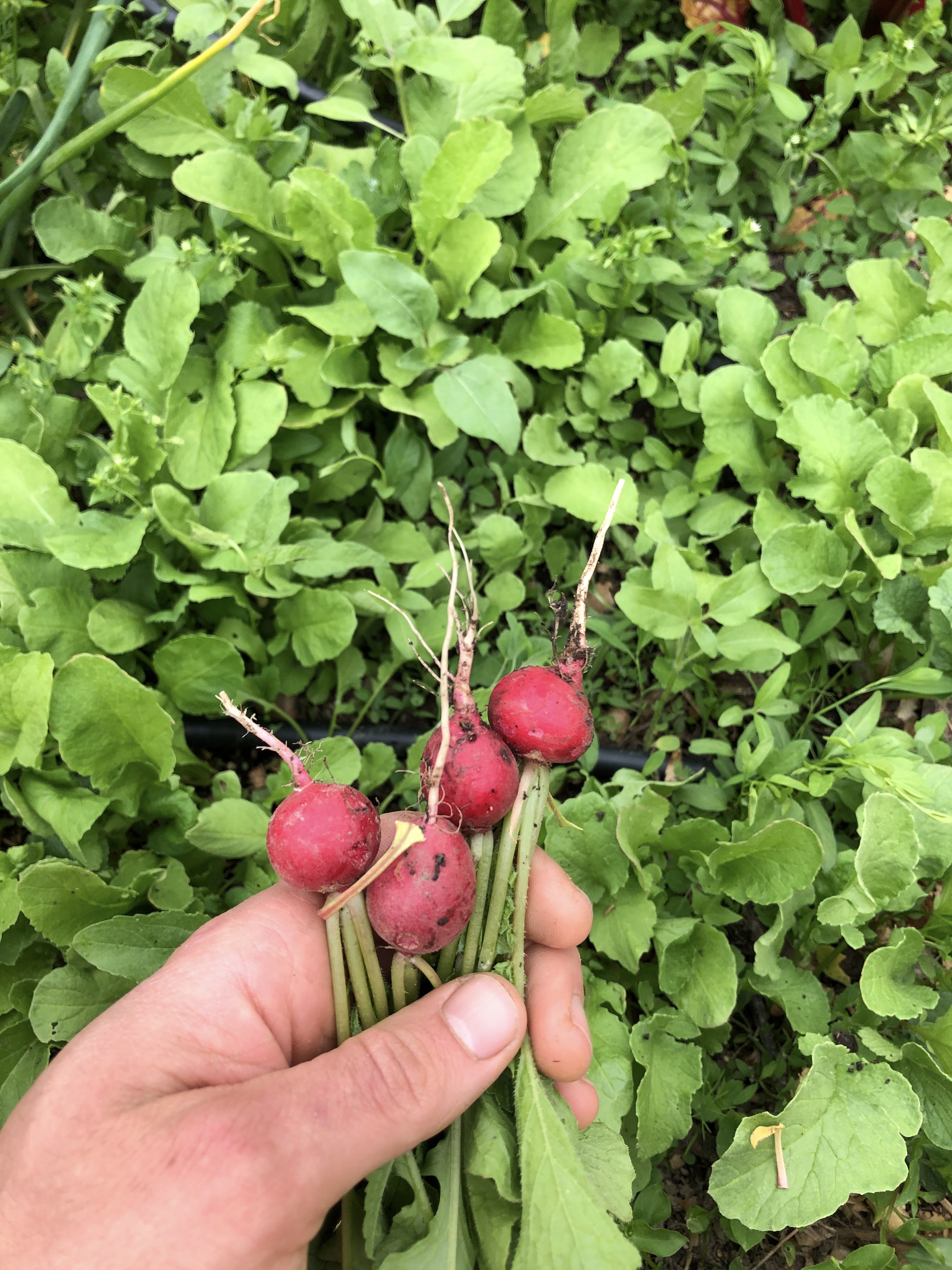
OneSeed Image
Description
Radishes (Raphanus sativus) are one of the fastest-growing vegetables, making them a popular choice among gardeners and farmers alike. Originating from Southeast Asia, this root vegetable has been cultivated for thousands of years and is now enjoyed worldwide for its peppery flavor and crisp texture. Radishes come in a variety of shapes, sizes, and colors, including red, white, purple, and black, with some varieties maturing in as little as three weeks after planting. This quick maturation makes them an ideal crop for continuous harvesting and a great way to introduce young gardeners to the joys of growing food. Beyond their culinary uses, radishes are also appreciated for their health benefits, being low in calories and high in vitamin C, as well as antioxidants and minerals like potassium and calcium.
Cultivation of radishes is straightforward, requiring only well-drained soil rich in organic matter and consistent moisture to ensure rapid growth and prevent the roots from becoming woody or overly pungent. They can be planted either in early spring or late summer, as radishes prefer cooler temperatures for optimal development. The ability to grow quickly and under a variety of conditions makes radishes a versatile crop for both spring and fall gardens. Additionally, their flowers, which appear if the crop is left to grow past its harvest time, are edible and can attract pollinators to the garden. Whether grown for their roots or their blossoms, radishes add a burst of color, flavor, and nutrition to the garden and table, embodying the simplicity and reward of home gardening.
Growing Details
Radishes are easy to grow and can be planted in both spring and fall. They prefer well-drained, sandy soil and full sun, but will tolerate partial shade. Radishes can be direct-seeded or started indoors and then transplanted outside. Seeds should be planted 1-2 cm deep and spaced 5-10 cm apart. For best results, keep the soil moist and fertilize regularly.
Edible Parts
Leaves
Seed Pod
Flowers
Tags
Attracts Wildlife
Bee Friendly
Range (Based on GBIF Data)
The map shows known occurrence points of <strong>Raphanus sativus</strong> recorded in scientific biodiversity databases.
Source: <a href="https://www.gbif.org" target="_blank">GBIF.org</a> — Global Biodiversity Information Facility
Location & Timing
native geo location: Mediterranean
applicable geo region: Worldwide
language used: english
Flowering:
beginning
of March for 21 days
Harvest:
beginning
of May for 25 days
Seed Start:
beginning
of March
Indoor Start:
Transplant:
Uses & Benefits
Edible Rating:
(4/5)
edible uses: Radishes can be eaten raw, roasted, stir-fried, or pickled. The greens are also edible and can be used in salads or as a cooked green.
Medicinal Rating:
(3/5)
medicinal uses: Radishes have been used medicinally for centuries. They are thought to have antibacterial, antifungal, and anti-inflammatory properties. Some people use radishes to treat digestive problems, such as constipation, diarrhea, and indigestion. Radishes are also used as a diuretic to help flush toxins from the body and as a laxative to promote bowel movements. Radishes are sometimes used topically to treat skin conditions, such as acne, psoriasis, and eczema.
health concerns: Radishes are generally considered safe to eat. However, some people may experience bloating, gas, or other digestive problems after eating them. People with allergies to other members of the Brassica family, such as broccoli, Brussels sprouts, and cabbage, may also be allergic to radishes.
other uses: Radishes can be used as a companion plant to help deter pests from attacking other plants. They can also be used as a natural dye.
Scientific Literature
Loading scientific articles about <strong>Raphanus sativus</strong>...
Botanical data
specie: Raphanus sativus
common names: rotkvice
family: Brassicaceae
sub family: Brassiceae
tribe: Brassicinae
sub tribe: Raphaninae
genus: Raphanus
Growing Conditions
area needed: 0.5 m
spacing: 0.05 m
grow time (non perennials): 30 days
growing difficulty: Low
Deciduous / Evergreen: Deciduous
Seed Temp (Opt/Min/Max): 21°C / 4°C / 38°C
Plant Temp (Opt/Min/Max): 21°C / 4°C / 38°C
water demands: Low
humidity: Medium
light demands: Low
root type: Medium
frost tender: Low
hardness:
█
█
▁
▁
▁
▁
▁
▁
▁
▁
(2/10)
first harvest: None years
life span: None years
succession:
growth rate: Fast
max height: 0.5 m
max width: 0.2 m
soil preference:
pH preference:
flower type:
Hermaphrodite
growth details: Radishes are easy to grow and can be planted in both spring and fall. They prefer well-drained, sandy soil and full sun, but will tolerate partial shade. Radishes can be direct-seeded or started indoors and then transplanted outside. Seeds should be planted 1-2 cm deep and spaced 5-10 cm apart. For best results, keep the soil moist and fertilize regularly.
Potential Disturbances: Radish plants face challenges from aphids, flea beetles, cucumber beetles, root-knot nematodes, wireworms, and white grubs. Aphids may stunt growth, while cucumber beetles can spread diseases. Root-knot nematodes lead to gall formation.
Permanent Link
Scan this QR code for a permanent link to this plant:
 Download QR Code

Loading comments...