Chicory - Cichorium intybus
cichorium intybus
Plant Images
OneSeed Image
Description
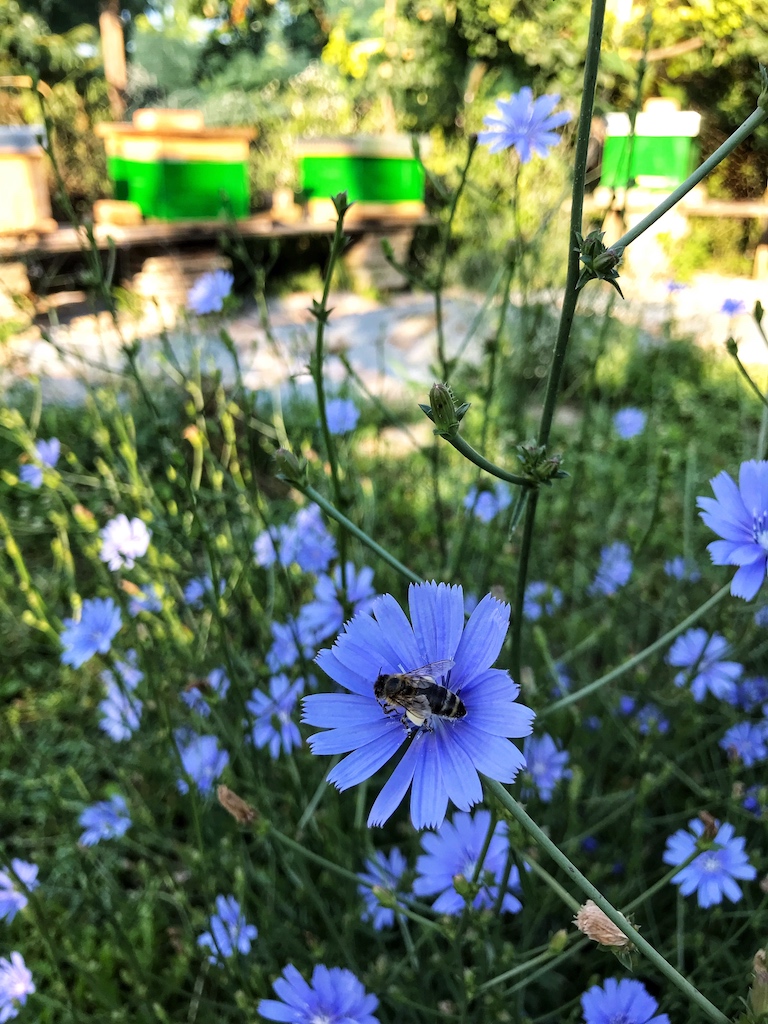
Cichorium intybus, commonly known as chicory, is a somewhat woody, perennial herbaceous plant of the dandelion family Asteraceae, usually with bright blue flowers, rarely white or pink. Many varieties are cultivated for salad leaves, chicons (forced blanched buds), or roots (var. sativum), which are baked, ground, and used as a coffee substitute and coffee additive. It is also grown as a forage crop for livestock. It lives as a wild plant on roadsides in its native Europe, and in North America and Australia, where it has become naturalized. Common chicory includes the varieties Cichorium intybus var. foliosum and Cichorium intybus var. sativum. Chicory is also grown for its roots, which are used as a coffee substitute and as a medicinal herb. It is also grown as a forage crop for livestock.
Growing Details
Chicory prefers full sun and well-drained soils. It is tolerant of drought and poor soils. It can be grown from seed, and will self-seed readily.
Edible Parts
Leaves
Seed Pod
Flowers
Tags
Attracts Wildlife
Scented Plant
Hay
Bee Friendly
Meadow
Visual Appeal
Easy Propagating
Range (Based on GBIF Data)
The map shows known occurrence points of <strong>cichorium intybus</strong> recorded in scientific biodiversity databases.
Source: <a href="https://www.gbif.org" target="_blank">GBIF.org</a> — Global Biodiversity Information Facility
Location & Timing
native geo location: Europe, Asia
applicable geo region: Temperate zones
language used: english
Flowering:
beginning
of July for 120 days
Harvest:
beginning
of October for 30 days
Seed Start:
beginning
of August
Indoor Start:
Transplant:
Uses & Benefits
Edible Rating:
(4/5)
edible uses: Chicory leaves can be eaten raw in salads or cooked as greens. The leaves have a slightly bitter taste, and the root has a bitter and coffee-like flavor. Chicory is often used as a coffee substitute and can be used as a coffee extender. It is used as a flavoring agent in some liqueurs. Chicory is used as a food plant by the larvae of some Lepidoptera species, such as the Pearl-bordered Fritillary. The roots can be roasted and ground, and used as a coffee substitute.
Medicinal Rating:
(0/5)
medicinal uses:
health concerns: Chicory may cause an allergic reaction in people who are sensitive to the Asteraceae/Compositae plant family. This reaction is usually due to the plant's pollen.
other uses: Chicory is used as a food plant by the larvae of some Lepidoptera species, including the setaceous Hebrew character Xestia c-nigrum. Chicory is often used as a coffee substitute and can be used as a coffee extender. It is used as a flavoring agent in some liqueurs. Chicory is used as a food plant by the larvae of some Lepidoptera species, such as the Pearl-bordered Fritillary. The roots can be roasted and ground, and used as a coffee substitute. Very good forage crop for livestock.
Scientific Literature
Loading scientific articles about <strong>cichorium intybus</strong>...
Botanical data
specie: cichorium intybus
common names: Chicory, cikorija
family: Asteraceae
sub family: Cichorioideae
tribe: Cichorieae
sub tribe: Cichoriinae
genus: Cichorium
Growing Conditions
area needed: 0.4 m
spacing: 0.3 m
growing difficulty:
Deciduous / Evergreen: Deciduous
Seed Temp (Opt/Min/Max): 20°C / 15°C / 25°C
Plant Temp (Opt/Min/Max): 20°C / -20°C / 30°C
water demands: Medium
humidity: Medium
light demands: High
root type: Medium
frost tender:
hardness:
█
█
█
█
█
▁
▁
▁
▁
▁
(5/10)
first harvest: 1 years
life span: None years
succession:
growth rate: Fast
max height: 1.5 m
max width: 0.5 m
soil preference:
pH preference:
flower type:
growth details: Chicory prefers full sun and well-drained soils. It is tolerant of drought and poor soils. It can be grown from seed, and will self-seed readily.
Potential Disturbances: Chicory may face challenges from slugs, snails, weevils, root-knot nematodes, aphids, flea beetles, cucumber beetles, red spider mites, and powdery mildew.
Permanent Link
Scan this QR code for a permanent link to this plant:
 Download QR Code

Loading comments...