
Cherry
Prunus avium
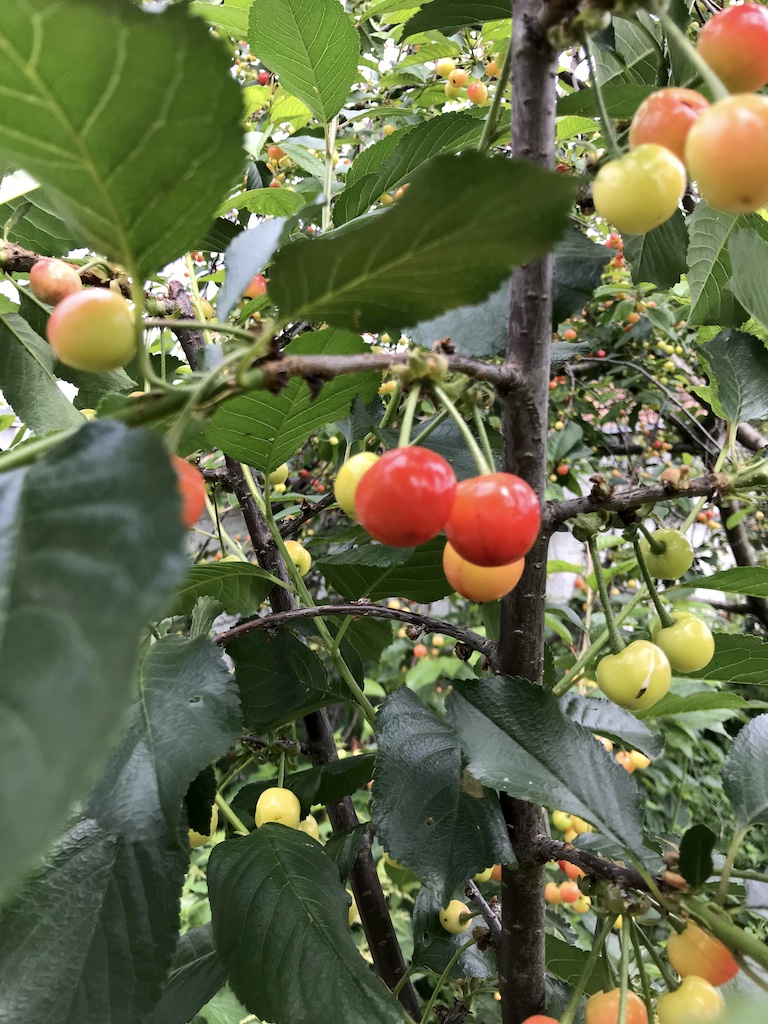
The sweet cherry (Prunus avium) is a species of cherry native to Europe, Anatolia, and the Caucasus, which has been cultivated and appreciated worldwide. Not only is it sought after for its delicious fruit, but the aesthetic appeal of the tree, especially during its flowering season, has also contributed to its popularity. The sweet cherry thrives best in temperate climates and has been successfully introduced to similar regions across North America, South America, and Asia. In terms of cultivation, sweet cherries require well-drained, fertile soil and are sensitive to temperature fluctuations. Late frosts can be particularly damaging to the blossoms. The trees are also prone to various pests and diseases, necessitating careful management in commercial orchards. There are numerous cultivars of sweet cherry, with some bred for larger, sweeter fruits, while others are developed for improved disease and pest resistance. The sweet cherry tree itself, when not limited by cultivation practices, can grow to a substantial height. In the wild, it can reach up to 20 meters, but in cultivated settings, its height is often controlled through pruning and grafting. The tree is characterized by a rounded crown, smooth bark, and shiny, reddish-brown young twigs and branches. In the autumn, its leaves transform into vivid shades of yellow or red, making it a highly valued ornamental tree. Flowering in the sweet cherry occurs in early spring, with the timing dependent on the local climate. The blossoms are crucial for many pollinators, including bees. While some cherry varieties are self-fertile, many require cross-pollination with other cherry varieties to bear fruit. The fruit of the sweet cherry is a drupe, featuring a thin skin and a juicy, sweet flesh that encases a hard stone or seed. The skin color ranges from bright red to dark purple, often with a glossy sheen. The flavor can vary significantly between cultivars, from very sweet to a mild sweetness with a hint of tartness. Apart from being consumed fresh, sweet cherries are widely used in cooking and baking. They are a popular choice for desserts, jams, and as garnishes. Products such as cherry juice and wine are also derived from these fruits. Furthermore, the wood of the sweet cherry tree is highly valued in furniture making due to its fine grain and attractive color. Nutritionally, sweet cherries are a rich source of vitamins, particularly Vitamin C, and antioxidants. They possess anti-inflammatory properties and are often included in dietary recommendations for a healthy lifestyle. Harvesting of cherries takes place in the summer and is predominantly done by hand to prevent bruising. Due to their short shelf life, cherries are often consumed fresh or preserved through canning or freezing to extend their usability. This comprehensive understanding of the sweet cherry highlights its significance not just as a fruit but also as an important cultural and economic species.
This plant prefers full sun and moist, well-drained soils. It is not particular as to soil type but grows best in rich soils. It is moderately tolerant of urban pollution and will benefit from being planted in a relatively sheltered location.
The map shows known occurrence points of <strong>Prunus avium</strong> recorded in scientific biodiversity databases.
Source: <a href="https://www.gbif.org" target="_blank">GBIF.org</a> — Global Biodiversity Information Facility
Loading scientific articles about <strong>Prunus avium</strong>...
Loading comments...