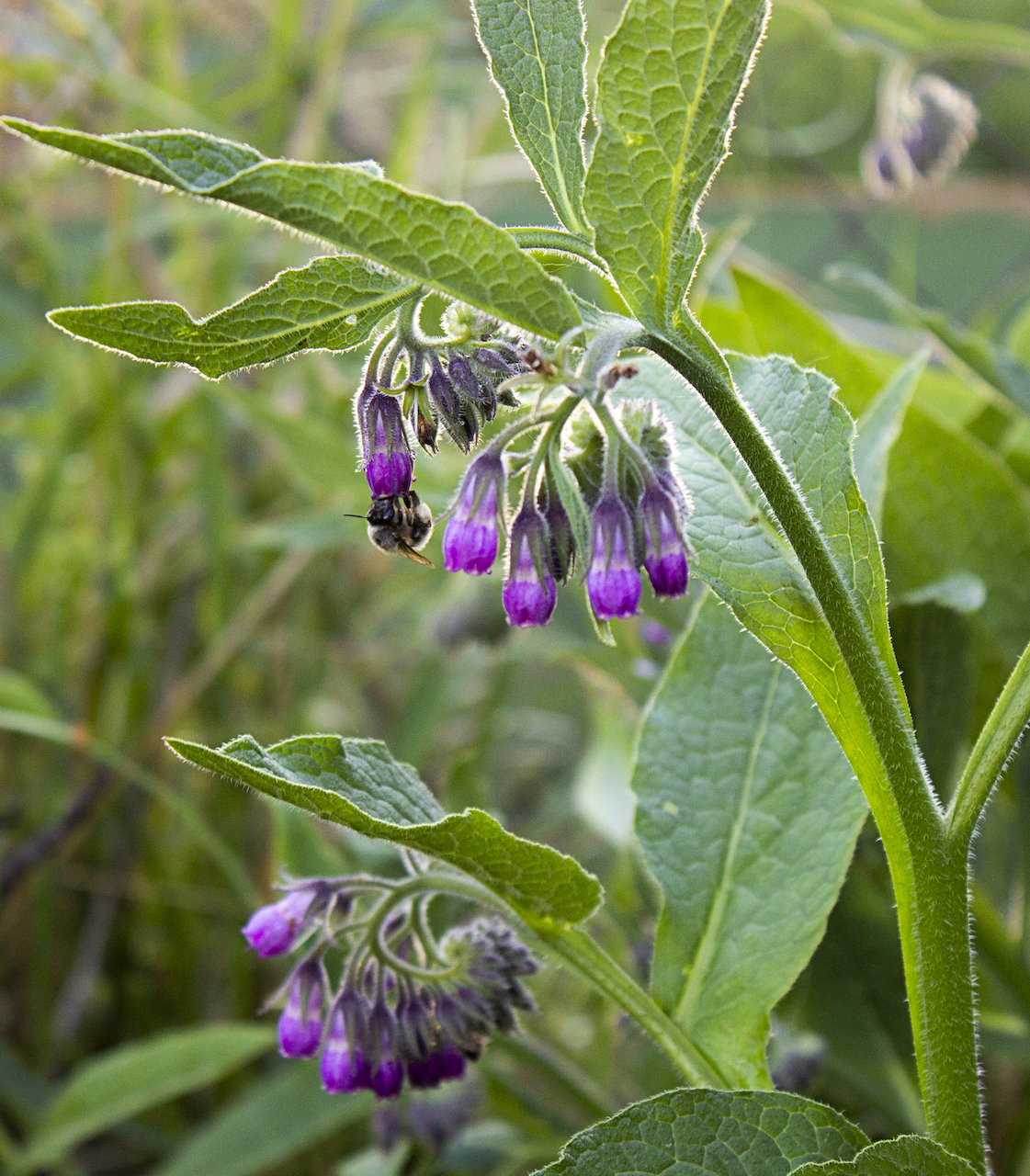
Comfrey (Symphytum uplandicum) is a perennial herb native to Europe and Asia. It is in the borage family. Other common names include knitbone, bruisewort and boneset. It has a long history of medicinal use, dating back to the first century AD. The leaves and roots contain allantoin, a substance that helps to heal wounds and soothe inflammation. Comfrey has also been used as a food crop and as a livestock feed. The leaves can be used in salads, and the roots can be used as a vegetable or a flavoring for soups and stews. Comfrey is a very versatile plant and has a wide range of uses. It can be used as a mulch, a compost activator, a fertilizer, or even as a source of fuel. Comfrey is an excellent plant for the home gardener or the small-scale farmer. It is easy to grow and requires very little care.
The map shows known occurrence points of <strong>symphytum officinale</strong> recorded in scientific biodiversity databases.
Source: <a href="https://www.gbif.org" target="_blank">GBIF.org</a> — Global Biodiversity Information Facility
Location & Timing
native geo location: Europe, Asia
applicable geo region: Temperate zones
language used:
Flowering:
?
Harvest:
beginning
of May for 60 days
Seed Start:
?
Indoor Start:
Transplant:
Uses & Benefits
Edible Rating:
(3/5)
edible uses: Comfrey leaves can be used as a leaf vegetable. They are mild and nutty with a hint of sweetness. The young leaves can be used in salads, while the older leaves are best cooked. Comfrey leaves are an excellent source of vitamin C and protein. They also contain high levels of potassium, calcium, and phosphorus. The leaves can be juiced or made into a tea.
Medicinal Rating:
(3/5)
medicinal uses: Comfrey has a long history of use as a medicinal herb. It has been used to treat a variety of conditions, including bruises, burns, sprains, and broken bones. Comfrey is thought to speed up the healing process by stimulating the growth of new cells. It is also used as a natural laxative.
health concerns: Comfrey is known to contain small amounts of liver-damaging pyrrolizidine alkaloids. These alkaloids can cause liver damage and cancer if consumed in large amounts. However, comfrey is not known to contain high enough levels of these alkaloids to cause harm. Comfrey should not be used by pregnant or breastfeeding women, or by children under the age of 12.
other uses: Comfrey can be used as a green manure. It is often grown as a companion plant to other crops, such as potatoes and tomatoes. Comfrey can also be used to make a liquid fertilizer. The leaves can be used as mulch or added to compost.
Scientific Literature
Loading scientific articles about <strong>symphytum officinale</strong>...
Botanical data
specie: symphytum officinale
common names: comfrey, gavez
family: boraginaceae
sub family:
tribe:
sub tribe:
genus: symphytum
Growing Conditions
area needed: 1.0 m
spacing: 0.5 m
growing difficulty: Low
Deciduous / Evergreen: Evergreen
Seed Temp (Opt/Min/Max): 0°C / 0°C / 0°C
Plant Temp (Opt/Min/Max): 25°C / -35°C / 35°C
water demands: Low
humidity:
light demands: Medium
root type: Deep
frost tender: Low
hardness:███▁▁▁▁▁▁▁(3/10)
first harvest: 2 years
life span: None years
succession: Pioneer
growth rate: Fast
max height: 1.0 m
max width: 1.0 m
soil preference:
Medium (Loam)
pH preference:
flower type:
growth details:
Potential Disturbances: Comfrey may face challenges such as root rot in poorly drained soils and competition from aggressive weeds. Leaf damage can occur due to environmental stressors.
Growth Timeline
Recipes Using This Plant
Animals Interacting With This Plant
Permanent Link
Scan this QR code for a permanent link to this plant:

Loading comments...