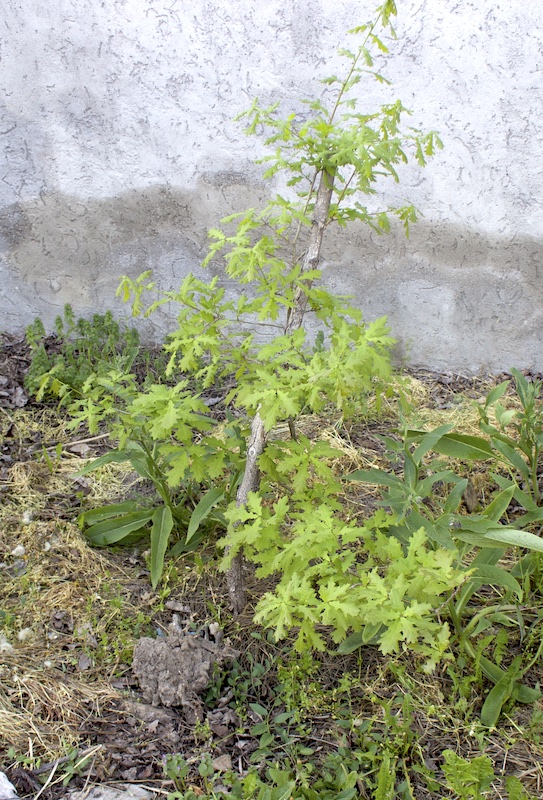
Oak is a tree or shrub in the genus Quercus of the beech family, Fagaceae. There are approximately 600 extant species of oaks. The common name "oak" may also appear in the names of species in related genera, notably Lithocarpus. The genus Quercus is native to the Northern Hemisphere, and includes deciduous and evergreen species extending from cool temperate to tropical latitudes in the Americas, Asia, Europe, and North Africa. North America contains the largest number of oak species, with approximately 90 occurring in the United States, while Mexico has 160 species of which 109 are endemic. The second greatest center of oak diversity is China, which contains approximately 100 species. Oaks have spirally arranged leaves, with lobate margins in many species; some have serrated leaves or entire leaves with smooth margins. Many deciduous species are marcescent, not dropping dead leaves until spring. In spring, a single oak tree produces both male flowers (in the form of catkins) and small female flowers. The fruit is a nut called an acorn, borne in a cup-like structure known as a cupule; each acorn contains one seed (rarely two or three) and takes 6–18 months to mature.
Growing Details
Edible Parts
Tags
Range (Based on GBIF Data)
The map shows known occurrence points of <strong>Quercus</strong> recorded in scientific biodiversity databases.
Source: <a href="https://www.gbif.org" target="_blank">GBIF.org</a> — Global Biodiversity Information Facility
Location & Timing
native geo location: Northern Hemisphere
applicable geo region: Worldwide
language used: english
Flowering:
beginning
of March for 60 days
Harvest:
beginning
of October for 30 days
Seed Start:
beginning
of January
Indoor Start:
Transplant:
Uses & Benefits
Edible Rating:
(3/5)
edible uses: The acorns of certain species are edible raw or after leaching of tannins, but some may be slightly toxic.Leached acorns can be ground into a flour that is usable for making bread, cakes, porridge, or as a thickener for stews.Leached and ground acorns can also be combined with other flours to make cornbread.The acorns of red oaks (genus Erythrobalanus) take two years to mature, while white oaks (genus Leucobalanus) take only one year.
Medicinal Rating:
(4/5)
medicinal uses: The inner bark of the white oak has astringent properties and was used in folk medicine as a treatment for diarrhea, dysentery, and other gastrointestinal problems.The acorns of the white oak are also rich in tannins and have astringent, antiseptic, and styptic properties.They were used in folk medicine as a treatment for wounds, burns, and other skin problems.The bark and acorns of the black oak are also rich in tannins and have astringent, antiseptic, and styptic properties.
health concerns:
other uses:
Scientific Literature
Loading scientific articles about <strong>Quercus</strong>...
Botanical data
specie: Quercus
common names:
family: Fagaceae
sub family: Quercoideae
tribe: Quercineae
sub tribe:
genus: Quercus
Growing Conditions
area needed: 5.0 m
spacing: 5.0 m
growing difficulty:
Deciduous / Evergreen: Deciduous
Seed Temp (Opt/Min/Max): 15°C / 5°C / 25°C
Plant Temp (Opt/Min/Max): 20°C / 15°C / 30°C
water demands: Medium
humidity:
light demands: High
root type:
frost tender:
hardness:██▁▁▁▁▁▁▁▁(2/10)
first harvest: None years
life span: None years
succession:
growth rate:
max height: None m
max width: None m
soil preference:
pH preference:
flower type:
growth details:
Potential Disturbances: Oak faces challenges from oak wilt, gypsy moths, sudden oak death, and defoliators. Monitoring tree health and promoting biodiversity can help manage these issues.
Growth Timeline
Recipes Using This Plant
Animals Interacting With This Plant
Permanent Link
Scan this QR code for a permanent link to this plant:

Loading comments...