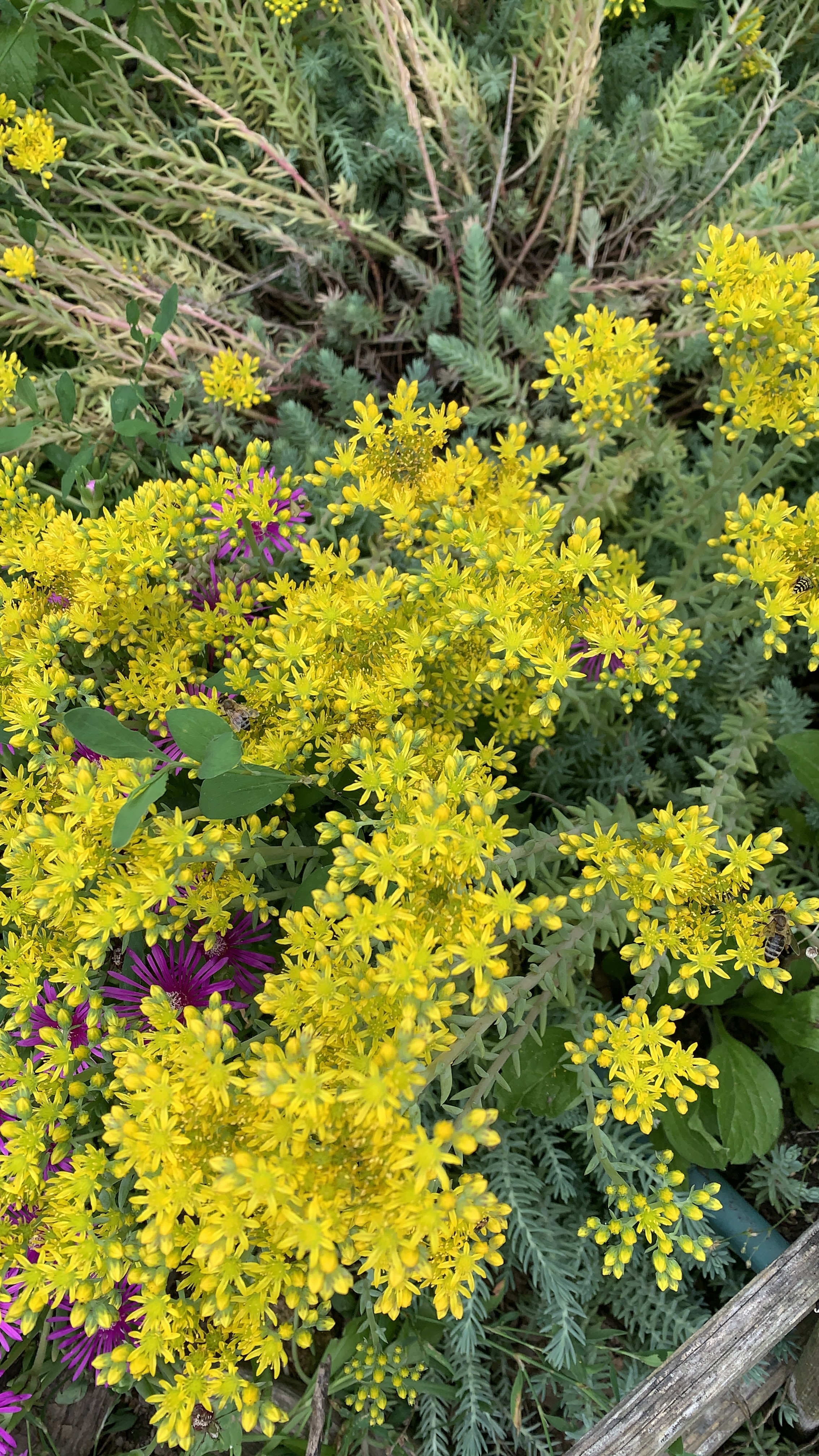
Sedum montanum, commonly known as Mountain Stonecrop, is a perennial succulent native to central and southern Europe. It forms a dense, cushion-like ground cover with small, fleshy, dark green leaves and clusters of star-shaped yellow flowers in summer. This plant is well-suited for rock gardens, borders, and container planting. In the context of agroecology, it serves as a ground cover in food forests, helping to suppress weeds and retain soil moisture. It is drought-tolerant and thrives in full sun with well-drained soil. Historically, Sedum species have been used in traditional medicine for their anti-inflammatory properties. In a regenerative agriculture setting, it can be part of a guild with other drought-tolerant plants like thyme and lavender, providing habitat for beneficial insects.
Growing Details
Sedum montanum seeds should be sown in late winter. Use a well-drained seed starting mix in shallow trays. Lightly cover the tiny seeds and mist the soil to keep it moist but not wet. Place the seed tray in a warm location away from direct sunlight. The ideal germination temperature is around 21°C. Once established, Sedum montanum requires minimal watering and thrives in poor, sandy soils. Mulching with gravel can help retain moisture and suppress weeds. Companion plants include thyme and lavend
The map shows known occurrence points of <strong>Sedum montanum</strong> recorded in scientific biodiversity databases.
Source: <a href="https://www.gbif.org" target="_blank">GBIF.org</a> — Global Biodiversity Information Facility
Location & Timing
native geo location:
applicable geo region:
language used: sr
Flowering:
beginning
of Jun for 60 days
Harvest:
beginning
of July for 30 days
Seed Start:
beginning
of March
Indoor Start:
Transplant:
Uses & Benefits
Edible Rating:
(1/5)
edible uses: The leaves and stems of Sedum montanum can be consumed raw or cooked. They have a slightly astringent taste and can be added to salads or used as a cooked vegetable. The plant can also be dried and ground into a powder for use in porridge. However, consumption should be moderate due to the presence of alkaloids, which can be toxic in large quantities.
Medicinal Rating:
(1/5)
medicinal uses: Sedum montanum has been traditionally used for its anti-inflammatory and wound-healing properties. The leaves can be crushed and applied topically to minor wounds and insect bites. However, internal use should be approached with caution due to potential toxicity.
health concerns: Contains alkaloids that can be toxic in large quantities. Use in moderation.
other uses: Can be used as a drought-tolerant ground cover in landscaping.
Scientific Literature
Loading scientific articles about <strong>Sedum montanum</strong>...
Botanical data
specie: Sedum montanum
common names: Mountain Stonecrop
family: Crassulaceae
sub family: Sedoideae
tribe: Sedeae
sub tribe: Sedinae
genus: Sedum
Growing Conditions
area needed: 0.1 m
spacing: 0.3 m
growing difficulty: Low
Deciduous / Evergreen: Deciduous
Seed Temp (Opt/Min/Max): 21°C / 5°C / 30°C
Plant Temp (Opt/Min/Max): 20°C / -20°C / 30°C
water demands: Low
humidity:
light demands: High
root type: Shallow
frost tender:
hardness:█████▁▁▁▁▁(5/10)
first harvest: 2 years
life span: 0 years
succession:
growth rate:
max height: 0.2 m
max width: 0.3 m
soil preference:
pH preference:
flower type:
growth details: Sedum montanum seeds should be sown in late winter. Use a well-drained seed starting mix in shallow trays. Lightly cover the tiny seeds and mist the soil to keep it moist but not wet. Place the seed tray in a warm location away from direct sunlight. The ideal germination temperature is around 21°C. Once established, Sedum montanum requires minimal watering and thrives in poor, sandy soils. Mulching with gravel can help retain moisture and suppress weeds. Companion plants include thyme and lavend
Potential Disturbances: Sedum montanum can be affected by aphids, caterpillars, and slugs. Introduce beneficial insects like ladybugs and lacewings to control aphids. Use neem oil or garlic spray for caterpillars. To deter slugs, use copper barriers or diatomaceous earth around the plants. Companion planting with marigolds can help repel pests.
Growth Timeline
Recipes Using This Plant
Animals Interacting With This Plant
Permanent Link
Scan this QR code for a permanent link to this plant:

Loading comments...